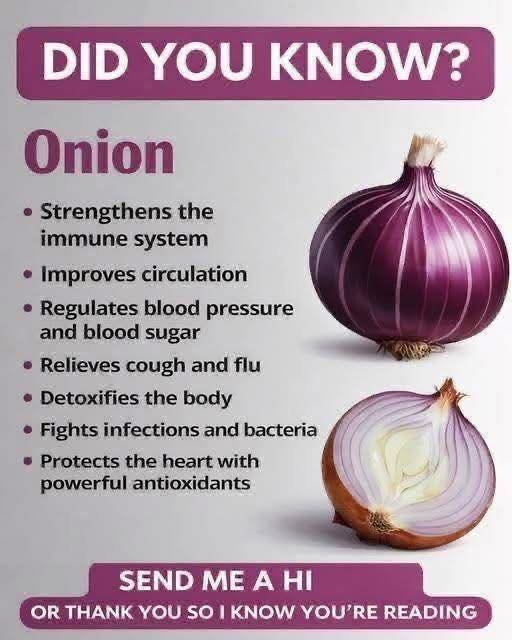
Polycystic Ovary Syndrome (PCOS) often presents with insulin resistance and imbalanced cholesterol levels.
-
Cholesterol Regulation: Clinical research demonstrates that raw red onion consumption has a profound cholesterol-lowering effect specifically in women with PCOS, significantly reducing both Total Cholesterol and Low-Density Lipoprotein Cholesterol (LDL-C, or “bad” cholesterol) (Ampeti).
-
Blood Sugar Control: Red onions are rich in quercetin, a powerful flavonoid that modulates glucose metabolism and improves insulin sensitivity, making it an excellent dietary intervention for managing metabolic syndrome and diabetes (Ampeti).
2. Anti-Aging and Radiant Skin
Onions function as a natural “treasure trove” for skin wellness due to their rich micronutrient profile (Nagpal).
-
Wrinkle Prevention & Elasticity: Red onions are dense in vitamins A, C, and E, which work synthetically to protect skin cells from premature aging. Quercetin acts as a powerful antioxidant to keep skin smooth and wrinkle-free, while natural sulfur compounds preserve skin moisture and elasticity (Nagpal).
-
Blemish Control: The vegetable possesses robust antimicrobial, antibacterial, and anti-inflammatory properties, making it an efficient natural combatant against acne-causing bacteria like Staphylococcus aureus (Nagpal; Zhao et al., 2021).
3. Cardiovascular and Bone Support
-
Blood Pressure: The quercetin isolated from onion extracts acts as a natural antihypertensive, significantly dropping systolic blood pressure to promote overall cardiovascular health (Ampeti).
-
Bone Density: Red onions pack unique polyphenols and sulfur-rich secondary metabolites that help protect against chronic, degenerative bone conditions like osteoporosis (Singla).
How to Eat Them for Maximum Benefit
To reap the highest medicinal value, eat red onions raw and minimally peeled. Cooking degrades the volatile organosulfur compounds responsible for their metabolic benefits. Furthermore, because the highest concentration of flavonoids, antioxidants, and vitamin C is packed directly into the outer red skin and the first few layers underneath it, peel off only the papery outermost layer to ensure you do not discard the most nutrient-dense pulp (Muscolo et al.).
References
Ampeti, S. (n.d.). A comprehensive review of Allium cepa in metabolic syndrome management. Journal of Medtigo.
Muscolo, A., et al. (n.d.). Unlocking the health secrets of onions: Investigating the phytochemical power and beneficial properties of different varieties and their parts. Molecules. Cited by: 12
Nagpal, N. (n.d.). Allium cepa: A treasure trove of therapeutic components and an asset for well-being. Acta Botanica.
Singla, P. (2018). Traditional health boosters: Onion, ginger and garlic. Chemical Science Review and Letters, 7(25), 42–47. Cited by: 2
